Why is Berlin this way?
Living in Berlin for some time now, I sometimes wonder - how did it become this crazy place?
It might not be obvious to weekend tourists and business-trip visitors, but once you bite deeper into the city, you can immediately feel it. There’s something in the air, as corny as that may sound.
Why is Berlin this way? What gave it its unique character, which doesn’t just manifest in the well-known party life, but in the overall eccentric “anything goes” atmosphere?
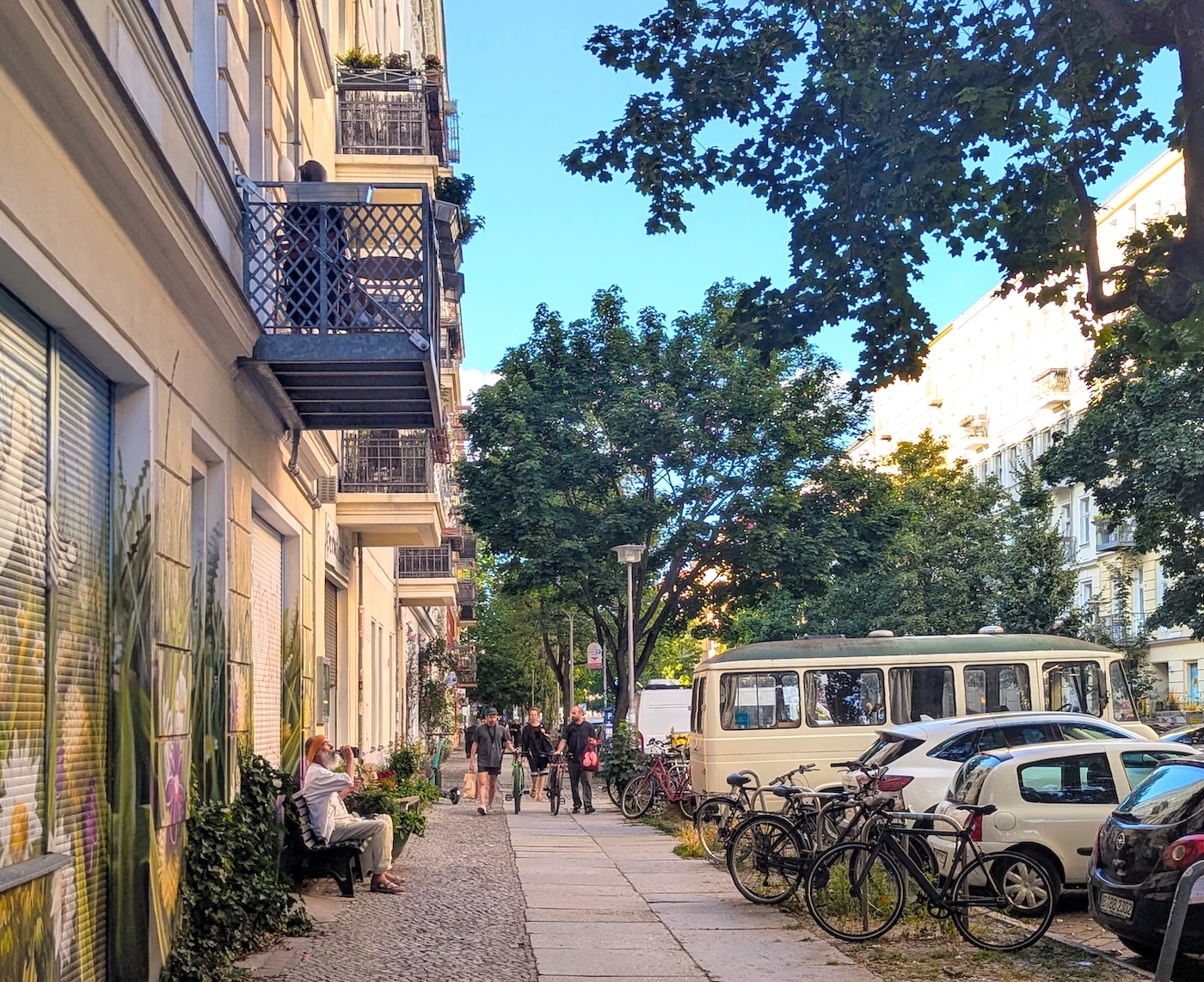 Lazy afternoon in the colorful Prenzlauer Berg. Credit: me
The early days
The story starts over a hundred years ago. After the abdication of Wilhelm II in 1918, Germany was converted into an unstable democratic state known as the Weimar Republic. People suddenly felt more free, with less authority and restriction hanging over their heads. Drugs became a common thing, with Berlin leading the way, as opposed to the more alcohol-oriented places like Münich.
The upcoming Third Reich focused on the “intelligence over intellect”, as Joseph Goebbels put it. He had a particular problem with the so-called “Asphalt literature” and “Asphalt culture”, referring to the urban progressive mindset found in big cities, particularly Berlin. He wanted to distance the people away from intellectual thinking and towards traditional nationalist values, famously burning books in 1933.
Berlin, guilty as charged, high on life and opioids, remained a thorn in their shoe. Hitler regarded it as dirty, a hotbed of communist, Jewish, liberal, and intellectual resistance, a center of “degeneration”. He even hired a guy named Albert Speer to completely raze it and rebuild it as a massive capital of his global empire, renamed “Germania” (some works already started, such as the relocation of the Berlin Victory Column… but most of them got postponed due to, well, other plans).
Berlin was already a hotspot for homosexuals at this time, another testament to its liberal mindset.
The Cold War
After World War II, West Berlin was controlled by the USA, UK and France. East Berlin was controlled by the Soviets. One interesting event happened in 1949 - West Berlin completely removed the curfew, an effort by The West to show their progressive mindset. To this day, Berlin remained one of not that many cities in the world where most bars, not to mention clubs, go all night.
In 1961, Soviets built the famous wall to physically prevent the “brain drain” from East to West. With all this turmoil, Berlin was economically struggling. It was poor. It was bad news for the aspiring upper middle class, but great news for artists and bohemians, who were completely drawn to it.
Two areas in particular - Kreuzberg and Neuköln.
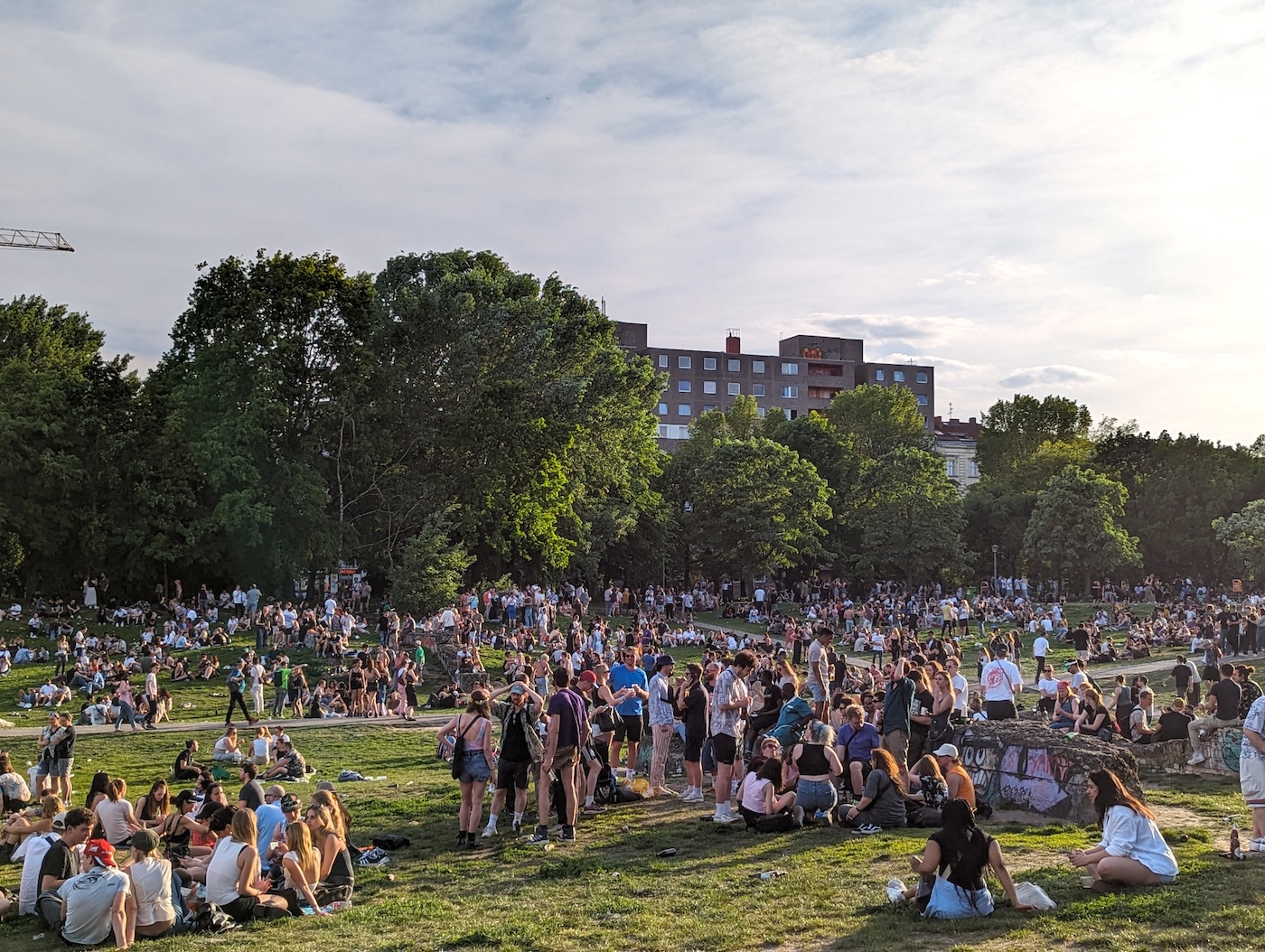 Woodstock vibes of Görlitzer Park in Kreuzberg. Credit: me
Placed at the very end of West Berlin, Kreuzberg was the poorest district that had everything: liberal mindset, access to drugs, and cheap rent. The dream. And it wasn’t just the misfits and drug enthusiasts; as part of the so-called Gasterbeiter program, lots of foreign workers (mostly Turkish) also started flocking to Kreuzberg in large numbers.
Other expats followed suit - today, Kreuzberg hosts about 180 different nationalities. Speaking of statistics, it also boasts the highest incidence of STDs in Germany. The price of the Kreuzberg lifestyle.
Unsurprisingly, it also became a place for political activism. Its rebellious nature strongly opposed the capitalism, with violent May Day riots being a prime example. Mind you, that was decades ago; nowadays it’s a huge street festival with parties and live music in every corner of Kreuzberg.
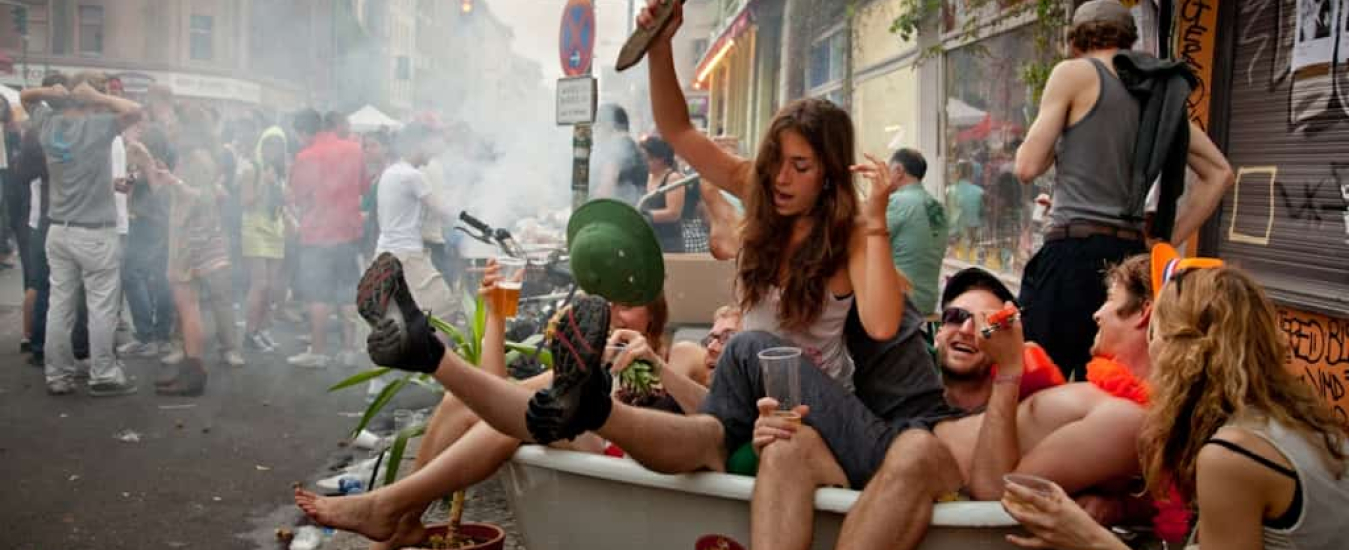 First of May in Berlin. Credit: berlinlovesyou.com
Also worth mentioning is SO36, a music venue named after the famous district postcode from the 70s. Back in the day, it was the face of the famous punk-rock Kreuzberg movement. Today, modern Berlin is famous for its techno scene and clubs like Berghain, Tresor and KitKat - but SO36 remains a legendary old-school venue for alternative music parties and live gigs. Apparently it was frequently visited by David Bowie and Iggy Pop during their Berlin years, and it’s one of my favorites as well.
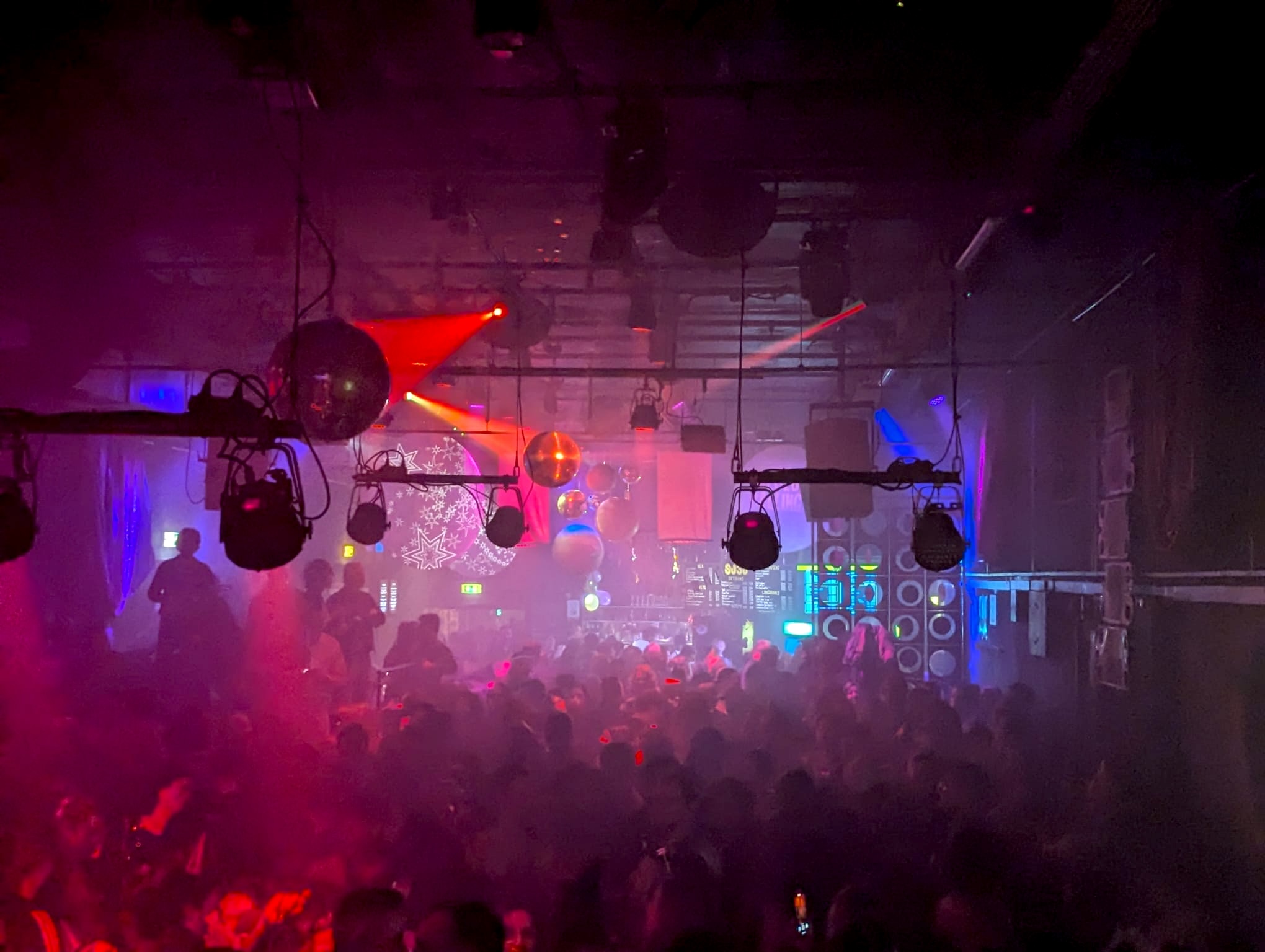 With over half a century on its shoulders, SO36 is still going strong. Credit: me
As for neighbouring Neukölln, it followed a similar development trajectory as Kreuzberg, just a bit postponed. While Kreuzberg was already this crazy left-wing anarchy place back in the 1970s, Neukölln remained a working-class industrial area until the 2000s. Nowadays it’s full of dive bars and jazz clubs, and while some resent this speedy gentrification, others are enjoying the increasing approachability of the place.
I heard an anecdote that lots of folks escaped Federal Republic of Germany (aka West Germany) in fear of being drafted in the army, and so they took shelter in West Berlin, which was officially not part of FRG (it was controlled by the Allies). And certain demographics correlate highly with despising the army: intellectuals, artists, anti-war protesters, LGBTQ+. Even more ingredients for the Berlin melting pot, which was very much cooking at this point.
Fall of the Wall
When the Berlin Wall finally came down in 1989, there was a massive population shift from East to West. It left East Berlin neighbourhoods like Friedrichshain, Mitte and Prenzlauer Berg completely deserted. Guess what? More hippies / artists / party folks came in swarms, not just from other parts of Berlin and Germany, but the world, paying crazy cheap rents or living for free, squatting in deserted buildings and hosting underground techno parties. West districts of Kreuzberg and Neukölln still continued to carry the torch for “crazy Berlin”, but a lot of it spread out to these suddenly-popular boho areas of East Berlin.
By the way, there’s more to West Berlin too. Take Schöneberg, often considered one of the most LGBTQ+ friendly districts of Europe. Or Wedding, the multi-culti, working class, “rough around the edges” spot that successfully avoids gentrification (but “it’s coming”!).
As a result, Berlin is a fun mix. And while some parts undeniably lack the eccentric charm of the ones I just mentioned, the “Berlin vibe” is pulpable across the whole city, decades and decades in the making. And it has an ugly side too, as one can surely imagine. There is some stuff you wouldn’t want your kids (or your visiting parents) to see. But I find it to be an acceptable price to pay for living in such a vibrant and unique city.